






South Florida E‑Commerce Marketing & Advertising Agency

E-Commerce Transformation
How an Artist Scaled Online Sales
Selling online is our specialty but, helping a visual artist transform his work into a scalable e-commerce business required a creative, data-driven strategy. When international artist Kader Boly approached J. Oliver Advertising, he had a compelling story, a strong product, and a loyal following but, his online store wasn’t converting as it should.
To elevate sales, we started with a full website redesign focused on streamlining the buyer journey. From there, we built a cohesive e-commerce strategy including,
organic content & social media management to grow followers and awareness, Google Merchant Center + SEO optimizations to improve visibility, advertising campaigns to scale print sales, & drop-shipping and fulfillment optimizations for sustainable DTC growth.
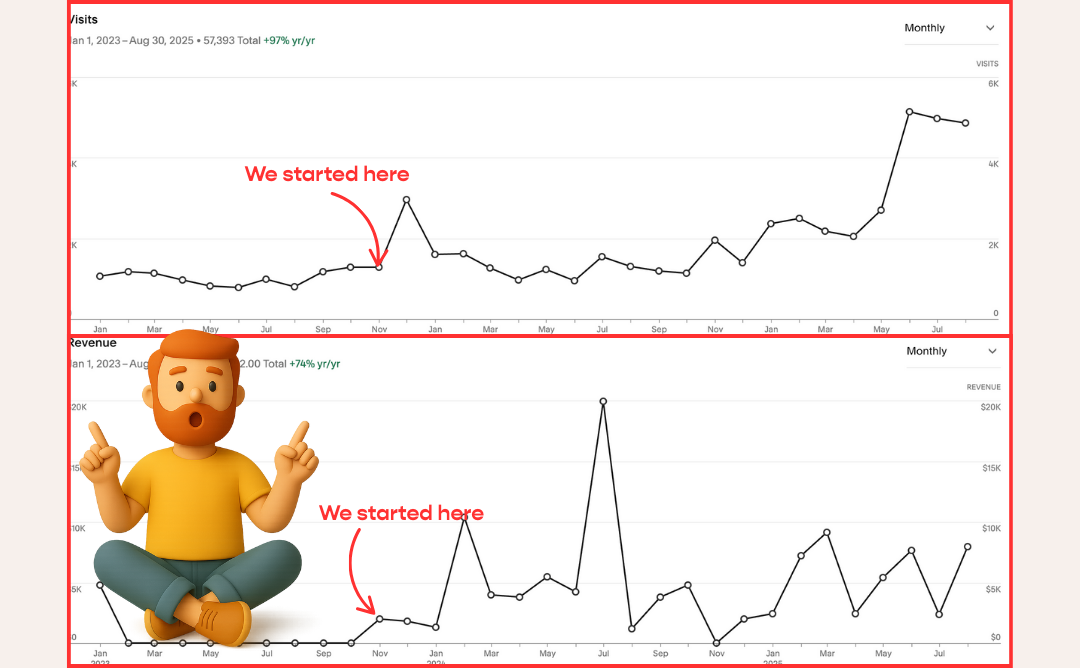
The result? Continuous growth in both traffic and revenue, proving how the right e-commerce marketing approach can turn creativity into consistent online sales.
Scroll down to explore the results and see the strategy in action.

E-Commerce Marketing Results: Kader Boly Case Study
With every piece of the strategy in place & optimized for performance, the results were undeniable. Kader’s online store experienced tremendous traffic growth, his revenue became more predictable, and his artwork began selling to entirely new audiences beyond his core collectors.
The campaign proved what’s possible when creative storytelling is paired with data-driven e-commerce marketing, a powerful testament not only to Kader’s talent but to the strength of a well-executed digital strategy.
growth in website traffic
average cost per acquisition
average growth in online sales
thrilled artist
Different Brands. Similar Success


Frequently Asked Questions
What does an e-commerce marketing agency do?
An e-commerce marketing agency builds and manages the full-funnel strategy that drives traffic, converts visitors into buyers, and turns buyers into repeat customers. At JOA, that means paid advertising on Meta and Google, SEO, email and SMS marketing, and content, all optimized around your margins, not just your revenue.
What marketing channels drive the most e-commerce sales in 2026?
Short-form video on TikTok Shop, Instagram, and YouTube is now a primary sales channel, beauty, apparel, and consumer brands are pulling 20–35% of new customer acquisitions through video as of early 2026. Meta and Google Ads remain the highest-volume paid channels. Email and SMS are the highest-ROI channels for repeat purchases and retention.
How does SEO work for e-commerce stores?
E-commerce SEO goes beyond product pages. The brands winning in 2026 have content layers, buying guides, category content, FAQ pages, and comparison articles that answer specific shopper questions. This content is picked up by both traditional Google search and AI-powered results. Stores with only product descriptions are increasingly invisible to a growing share of searchers.
What is a good ROAS for e-commerce advertising?
A 4:1 ROAS — $4 returned for every $1 spent is a standard benchmark for healthy e-commerce advertising. J. Oliver Advertising clients average a 4:4 ROAS across paid campaigns for all industries. That said, ROAS targets vary by category, margin, and customer lifetime value. For high-LTV products, a lower initial ROAS may still be profitable when repeat purchase revenue is factored in.
How do you reduce cart abandonment for an e-commerce store?
Cart abandonment averages 70%+ across most e-commerce categories. The most effective recovery strategies are automated email sequences triggered within 1 hour of abandonment, SMS follow-up for mobile shoppers, retargeting ads on Meta and Google, and checkout flow optimization. Combining all four typically recovers 10–15% of abandoned carts.
How long does e-commerce marketing take to produce results?
Paid advertising can drive sales within the first 1–2 weeks. SEO and content take 3–6 months to generate meaningful organic traffic. Email and SMS programs show ROI within the first 30–60 days once a list is established. The brands seeing the strongest long-term results invest in all three simultaneously rather than relying on paid alone.